
Where learning started
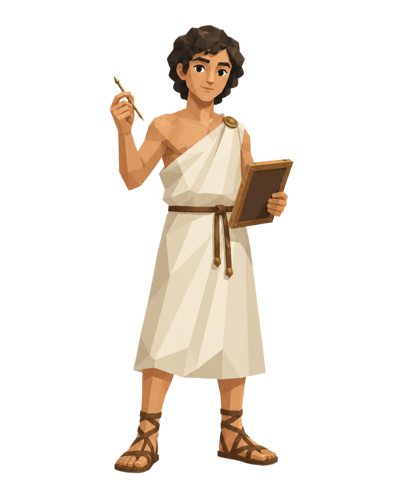
For most of history, nobody went to school. You learned by living. You watched your parents, followed a craftsman around, and picked things up from the people near you. There was no curriculum and no exam; there was doing, getting it wrong and trying again, with someone close enough to notice.
That is education in its original form, and in many ways it’s still the most powerful kind. It was personal, it was about real things, and you wanted to learn because the learning mattered straight away. But it had one hard limit: what you could learn depended entirely on who happened to be around you.
The first expansion: the apprentice
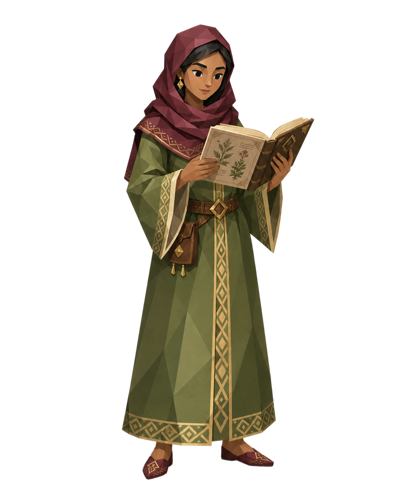
Then came the apprenticeship. You attached yourself to a master, not to collect information, but to become someone. You watched, you helped, you failed, you were corrected, and you tried again, for years. The relationship was the curriculum.
It produced some of the finest minds in history. It also only worked for the few. For every Leonardo who found his Verrocchio, there were thousands who never found anyone.
The second expansion: school for everyone
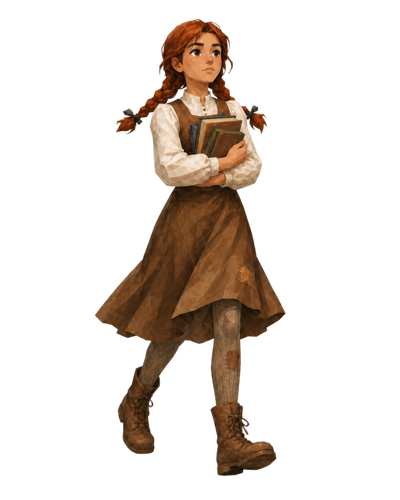
Then came school for everyone, and honestly, it’s one of the best things we ever did. For the first time, a kid from a modest family could learn algebra, read the great writers and hear about revolutions on the other side of the world. The reach of education grew by orders of magnitude.
But scale came at a price. One teacher, thirty students; same pace, same content, same test. Everything that made those thirty different (where they started, how they learned, when they were ready) got averaged out. We built a system for an average student who doesn’t exist.
I know, because I was one of the students it didn’t fit. I was curious, ahead in some subjects and behind in others, and bored by most of it, so I checked out. That only changed when I ended up in special education, where the classes were small and the teachers actually knew me. Not because the content was different; because someone finally saw me.
The third expansion: the internet
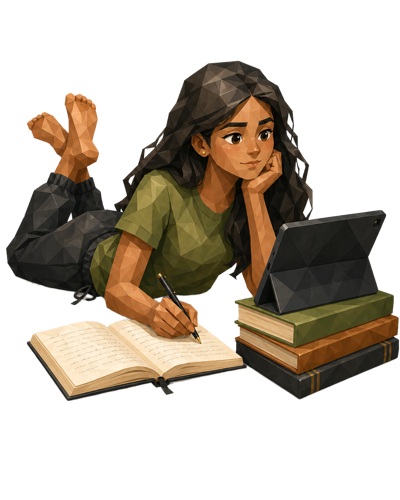
Then the internet made information practically free. Whatever a student wants to know, they can find in seconds. The lecture, the textbook, the encyclopaedia: none of it is scarce anymore.
You’d think that would have fixed it. It didn’t. A student can open everything Plato ever wrote and still not understand a word of it, because information without guidance isn’t education; it’s noise. The bottleneck was never the content. It was always the guide.
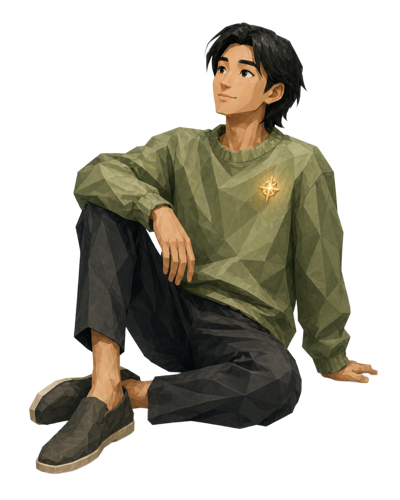
The gap
So that’s the gap. Not too little knowledge, but too little guidance: too little of the relationship that turns information into understanding.
And the strange thing is, we know what works. A student who gets steady, personal attention, who’s challenged at exactly the right level and gets feedback on how they think, learns faster, remembers more, and ends up actually liking learning. We’ve known this for centuries; the apprentices knew it. The method was never the problem. Access was.
I saw it from the other side, too. When I became a teacher, I wanted to be that person for every student. I’d walk up to each of them, ask what they were working on, and tie the material to something they cared about. It worked, when I had the energy. But not for thirty students, every class, every day. There were students whose names I still didn’t know at the end of the block.
AI changes that.
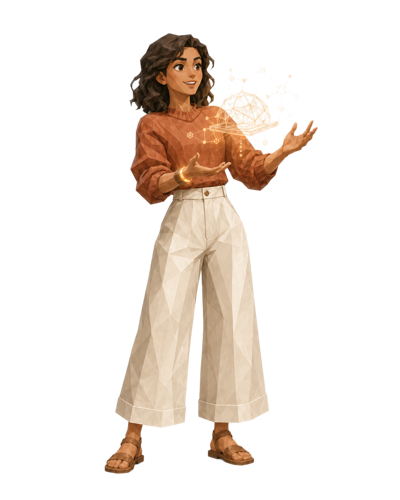
The next step
For the first time, every student can have what only a lucky few ever had: someone attentive, patient and well-read, who adapts to their pace and meets them where their curiosity is. Not a replacement for the teacher. A way for one teacher to be, in a real sense, there for every student at once.
The teacher doesn’t disappear in this. If anything, they get to be what they were always meant to be: the one who designs the learning, who knows the class, who inspires, challenges and connects. The part of education that happens between people, not on a screen.
Learning started out personal, but small. The apprenticeship made it deep, but only for a few. School made it universal, but impersonal. The internet made knowledge free, but left guidance scarce. The next step is to make guidance abundant, without flattening the people it’s for.